
A healthier gut starts with better questions.
Probiotic supplements can sound like a simple answer to bloating, irregular digestion, and everyday gut discomfort. But a good review looks beyond the promises. What organisms are included? What research applies to them? And does that research support the finished product?
Bioma is marketed as a gut-health supplement that combines probiotics with supporting ingredients. For Canadian readers, the most useful starting point is the actual label and the company’s ingredient disclosure—not a star rating or a guaranteed transformation.
Formula first
A disclosed blend of three Bifidobacterium species, plus supporting ingredients.
Realistic expectations
Probiotic effects vary. Ingredient research is not proof of product-specific results.
A Canadian lens
Check the NPN, current label, delivery terms, and the final cost in Canadian dollars.
The short answer: Bioma may be worth discussing with a pharmacist if you’re considering a probiotic. It is not a proven cure for digestive disease, and claims about weight loss, energy, or mood should not be treated as guaranteed outcomes.
What’s actually inside Bioma?
The ingredient disclosure published as a USA TODAY press release describes a three-species probiotic blend with a stated 9 billion colony-forming units (CFU) per serving. This is company-supplied information, not an independent USA TODAY product endorsement.
| Disclosed ingredient | What to know |
|---|---|
| Bifidobacterium lactis | A probiotic species. Findings about a particular strain cannot automatically be applied to every strain within this species. |
| Bifidobacterium longum | A species studied in gut-health research. The strain, dose, and intended use matter when assessing evidence. |
| Bifidobacterium breve | Another member of the Bifidobacterium genus. Its inclusion alone does not establish a specific clinical benefit. |
| Xylooligosaccharides (XOS) | A prebiotic ingredient, described in a related company disclosure, that can serve as a food source for gut microorganisms. |
| Tributyrin | A source of butyrate, also described in the company’s supporting-ingredient disclosure. Ingredient rationale is not a finished-product trial. |
Species names are not full strain identifiers. NIH guidance emphasizes identification by genus, species, and strain, because benefits can be strain-specific. Check the current label for exact strain codes, the serving size, storage instructions, and whether the CFU count is guaranteed through expiry.
Read the full ingredient disclosureGut health benefits: promise versus proof.
Some probiotics have evidence for particular uses, but they are not interchangeable. A result seen with one studied strain or combination does not establish the same result for Bioma. The NIH’s National Center for Complementary and Integrative Health notes that, for many uses, questions remain about which probiotics work, for whom, and at what dose.
Bloating and digestive comfort
Digestive comfort is a common reason people consider probiotics. Responses vary, and some people experience gas or bloating after starting them. Persistent symptoms need assessment rather than repeated supplement changes.
Regularity and the microbiome
Gut bacteria interact with diet and digestion, but “balancing the microbiome” is not a single measurable outcome for every person. Benefits depend on the organism, the person, and the condition being addressed.
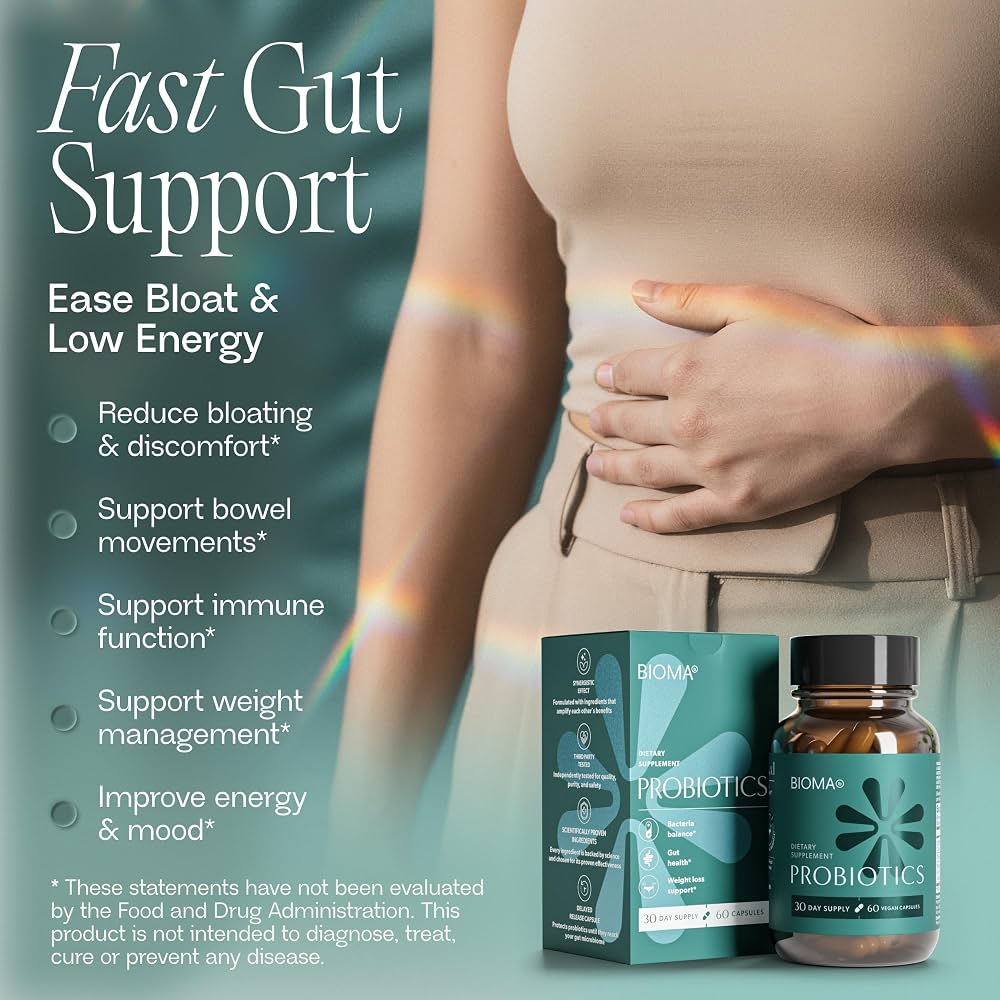
Keep the distinction clear: We do not present Bioma as a clinically proven weight-loss treatment, an immune treatment, or a substitute for medical care. This article does not establish independent clinical proof for the finished formula.
What results should you realistically expect?
There is no reliable, universal timeline for a Bioma result. You may notice a change, no change, or an unwanted effect. Neither “works in days” nor a fixed amount of weight loss is a responsible promise.
- Start with a specific goal. Discuss your symptoms and whether a probiotic is appropriate with a pharmacist or clinician.
- Follow the current product label. Do not infer dosing from a promotional photo or increase the dose to chase faster results.
- Track what matters. Note digestive symptoms, bowel habits, diet changes, and any side effects rather than relying on vague impressions.
- Reassess rather than continue indefinitely. Ask your clinician when to review your response and when to stop.
Who should be especially cautious?
People with weakened immune systems or serious illness should seek medical advice before using probiotics. NCCIH notes that risks can be greater in these groups. If you are pregnant, breastfeeding, taking medication, or considering a supplement for a child, check its suitability with a qualified professional.
Seek medical care for severe or persistent abdominal pain, blood in the stool, fever, unexplained weight loss, or a lasting change in bowel habits.
A practical checklist for Canadian buyers.
Before ordering, verify the exact product being sold in Canada. An image of a bottle or an overseas supplement disclaimer does not confirm Canadian licensing or the conditions of use.
- Verify the Natural Product Number. Look for the eight-digit NPN on the label and match the product and licence holder in Health Canada’s database.
- Check the licensed directions. Review the authorized use, dosage, warnings, and the ingredients on the bottle you will receive.
- Confirm the full cost in CAD. Check currency, taxes, shipping, any import charges, and whether the purchase starts a subscription.
- Read returns and delivery terms. Confirm delivery to your province, return eligibility, and cancellation conditions before paying.
We have not verified a current Canadian price, delivery promise, or refund offer, so no specific offer is quoted here. A product licence should not be read as support for every promotional claim.
Check Health Canada’s product databaseThe bottom line: informed, not overpromised.
Bioma has a disclosed probiotic blend and supporting ingredients with a gut-health rationale. That is a useful starting point, but a plausible formula is not the same as a demonstrated outcome for the complete product.
For Canadians considering Bioma, focus on the current label, strain-specific evidence, licensed conditions of use, and your own health needs. Healthy eating patterns, appropriate fibre intake, and professional advice remain more important than any one bottle.
Our conclusion: Consider Bioma as a supplement to evaluate—not a guaranteed solution. Ask better questions, verify the claims, and make a decision that fits your health rather than the marketing.
Your questions, answered.
Sources, not just claims.
Product details and independent health guidance serve different purposes. These references let you read both in context.